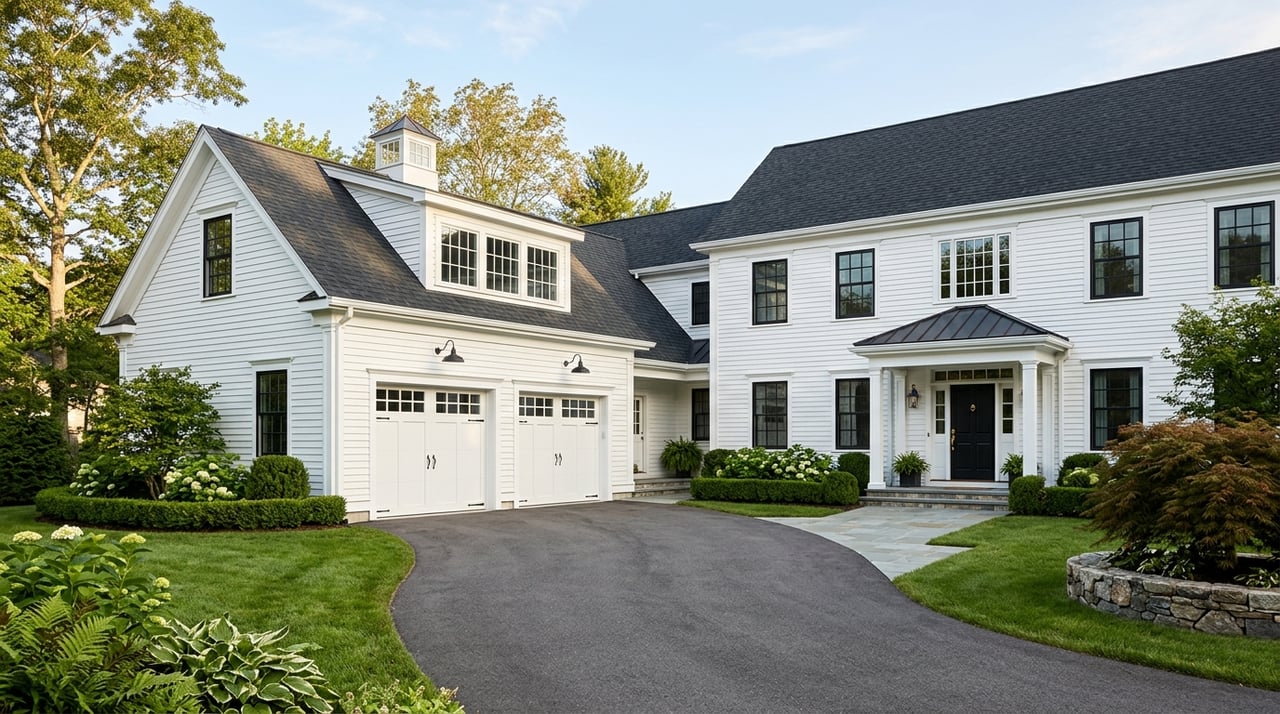
Is the Newton Corner Commute to Boston Right for You?
If your workday starts in Boston, your commute can shape almost every part of your home search. You may want quick access downtown without giving up the feel of a well-established Newton neighborhood. Newton Corner often comes up in that conversation, and for good reason. It offers strong bus access into Boston, but it is not the same as living near a rail stop. Let’s dive in.
Newton Corner is one of Newton’s most commute-oriented village areas. According to the City of Newton’s public transportation overview, the area is served by MBTA Route 57 to Kenmore, express Routes 501 and 504 to Back Bay and Downtown Boston, plus several less-frequent suburban routes.
That setup makes Newton Corner especially appealing if your destination is Back Bay, South Station, or central Boston. It gives you a bus-first commuting pattern that can feel more direct than many buyers expect from a suburban address.
For many Boston commuters, Newton Corner’s biggest advantage is simple: direct express bus service. The City of Newton identifies Routes 501 and 504 as key links to Back Bay and Downtown, and a Newton Corner planning study highlights Routes 57, 501, and 504 as the more frequent services in the area.
Current trip estimates also support that convenience. Rome2Rio estimates the 504 ride from Back Bay to Newton Corner at about 10 to 12 minutes, and Newton Corner to South Station at about 22 minutes by the 504 bus. Those are very workable travel times if your job is centered in downtown Boston.
If you commute into Boston several times a week, Newton Corner can be a practical match. You are not relying on a nearby rail platform in the village itself. Instead, you are leaning on direct bus routes that are oriented toward the city.
For some buyers, that is a plus. You may find that a one-seat bus ride to Back Bay or downtown feels easier than driving to another village for rail service.
One of the most important questions buyers ask is whether Newton Corner has its own rail stop. The answer is no. The City of Newton’s transit list places Green Line service at Riverside, Woodland, Waban, Eliot, Newton Highlands, Newton Centre, and Chestnut Hill, while commuter rail stops are in Auburndale, West Newton, and Newtonville.
That does not mean rail is out of reach. It means rail is a nearby option in other Newton villages, not a feature of Newton Corner itself.
If you prefer rail, nearby village options may still matter in your search. Current trip estimates show Newtonville to Back Bay at about 17 minutes by commuter rail, while West Newton and Auburndale are each estimated at about 23 minutes to Back Bay.
This is useful context if you like Newton Corner’s location but want flexibility. Depending on your work routine, you may find that a mix of bus commuting and occasional rail use from another village works well.
Newton Corner is usually a stronger fit for Boston than for Cambridge. Based on the published Newton route network, service from Newton Corner is focused on Kenmore, Back Bay, downtown Boston, and suburban connections rather than a direct Cambridge rail terminal.
In practical terms, that means Cambridge commuters often face a more transfer-heavy or car-dependent trip. If your office is in Kendall Square, Central Square, or another Cambridge destination, Newton Corner may still work, but it is typically less direct than neighborhoods with easier rail connections toward Cambridge.
Newton Corner can still appeal if your commute is hybrid, flexible, or split between Boston and Cambridge. It may also work if home style, lot size, or the broader Newton lifestyle matters more to you than having the shortest possible trip every day.
The key is going in with clear expectations. If Cambridge is your main destination, you should compare Newton Corner with rail-served Newton villages before deciding.
Commute convenience in Newton Corner is real, but it is not frictionless. A CTPS study of the I-90 interchange found that ten MBTA routes traverse Newton Corner and described heavy peak-period congestion and bus weaving at the rotary.
That matters because even strong transit access can be affected by roadway conditions. MassDOT’s long-term Newton Corner planning effort also remains active, which signals that transportation flow in the area is still an ongoing planning issue.
If you are evaluating Newton Corner, think of it as highly connected but imperfect. You may gain quick city access, especially for Boston-bound trips, while also needing to accept the realities of a busy interchange environment.
For many commuters, that tradeoff is absolutely worth it. For others, a quieter village near rail may be the better fit.
Commute access is only half the story. You also want to know what kinds of homes you are likely to find in Newton Corner.
According to Historic Newton’s overview of Newton Corner, the village began as a cluster of small homes and shops along Washington Street, followed later by rental housing and many single-family homes. The city’s geography description adds that the village center today functions as a Gateway Center with predominantly commercial space, professional and medical offices above the ground floor, and older or modern street-facing buildings ranging from two to nine stories.
In plain terms, the interchange core is more commercial and mixed-use than purely residential. The most residential areas are often on side streets and around the center rather than inside the busiest core itself.
That mix can be attractive if you want easier access to bus routes and local services. It can also create a different feel from Newton villages that are more clearly centered around a rail stop and surrounding residential blocks.
Newton Corner also includes smaller multi-unit housing types. City project pages note a 3-unit affordable rental building at 61 Pearl Street and a project that converted two existing two-family homes into four affordable rental units.
For homeowners thinking long term, Newton’s accessory dwelling unit rules add another layer of flexibility. The city allows one ADU on a single- or two-family home, which may be relevant if you are considering in-law space, guest space, or rental potential in an older neighborhood setting.
Newton Corner is also part of the city’s long-term housing conversation. The Village Center Overlay District was adopted in December 2023, and Newton Corner is among the village centers included in that rezoning framework.
The city says the overlay is intended to expand housing and commercial options near transit and village centers. Newton is also fully compliant with the MBTA Communities law as of March 2025, which adds helpful context for buyers watching future housing supply and development patterns.
If you are buying for the long run, planning context matters. Zoning and village-center policy can influence what gets built, how corridors evolve, and how a neighborhood functions over time.
That does not tell you exactly what any one block will look like in the future. It does mean Newton Corner is a place where transportation access and housing growth are closely connected.
Newton Corner may be a strong match if you:
It may be a less ideal fit if you:
So, is Newton Corner the right fit for Boston commuters? In many cases, yes. If your destination is downtown Boston, Back Bay, or South Station, Newton Corner offers some of the most practical bus-based access in Newton.
The tradeoff is that you are choosing a bus-first village with known traffic complexity and no rail stop in the village itself. For the right buyer, that balance works very well. If you want help comparing Newton Corner with other Newton villages based on your commute, housing goals, and timeline, Valerie Wastcoat can help you make a clear, neighborhood-specific decision.
If you’re looking for a dynamic approach to real estate from a top-performing, knowledgeable agent who truly goes above and beyond for clients, look no further. I will work side by side with you, navigating current market conditions and guiding you every step of the way.