Brookline MA Lifestyle and Amenities: What Daily Life Offers
Wondering whether Brookline feels more like Boston or more like a classic suburb? The honest answer is that it blends both in a way that is hard to fake. If you are considering a move here, it helps to know how the town actually works day to day, from its village centers and transit options to its housing mix and parking realities. Let’s dive in.
One of the first things you notice about Brookline is that it does not revolve around one large downtown. Instead, daily life tends to center around compact commercial hubs like Coolidge Corner, Brookline Village, and Washington Square.
That layout gives Brookline a very local rhythm. You may find yourself doing errands, meeting friends, or grabbing dinner within one village center while still living on a quieter residential street nearby. The result is a town that feels active and convenient without losing its neighborhood identity.
Brookline Village is described by the town as its largest commercial area, while planning documents for Coolidge Corner highlight access to shops, dining, entertainment, recreation, and green space in a pedestrian- and bicycle-friendly setting. In practical terms, that means many residents experience Brookline as a place where a lot of everyday life happens close to home.
Brookline’s village pattern is reinforced by local business and community groups. The Coolidge Corner Merchants Association helps market that area as a vibrant place to shop, while the Washington Square Association has supported visible local improvements like benches, planters, and a Victorian clock.
Brookline Village also has its own community traditions, including the annual Village Fair on Harvard Street. These kinds of institutions help explain why Brookline often feels more connected and place-based than many other dense suburbs.
The town describes itself as a mature suburban residential community with urban characteristics, and that is a useful way to think about it. Brookline sits about four miles from downtown Boston, is surrounded by Boston on three sides, and has a long streetcar-suburb history.
At the same time, it is not just an extension of the city. Less than 6% of Brookline’s land is zoned for commercial use, which helps preserve a strong residential feel even in a dense setting. You get city adjacency and convenience, but much of the town still reads as distinctly residential block by block.
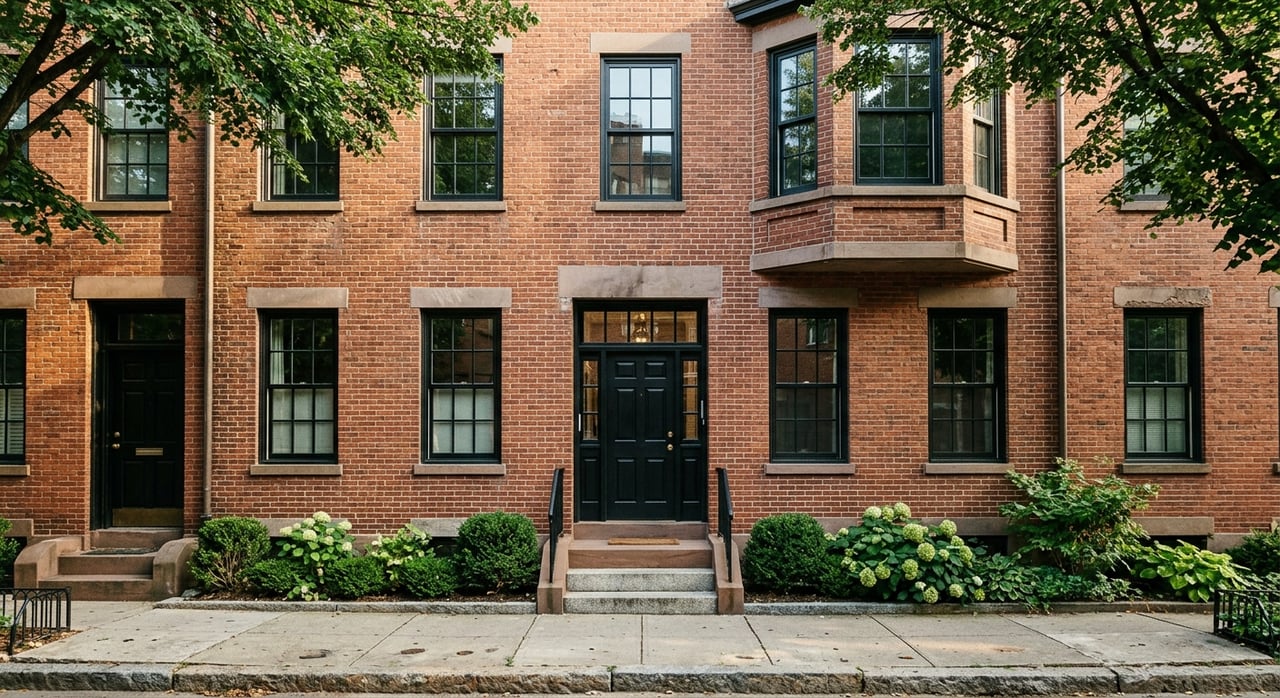
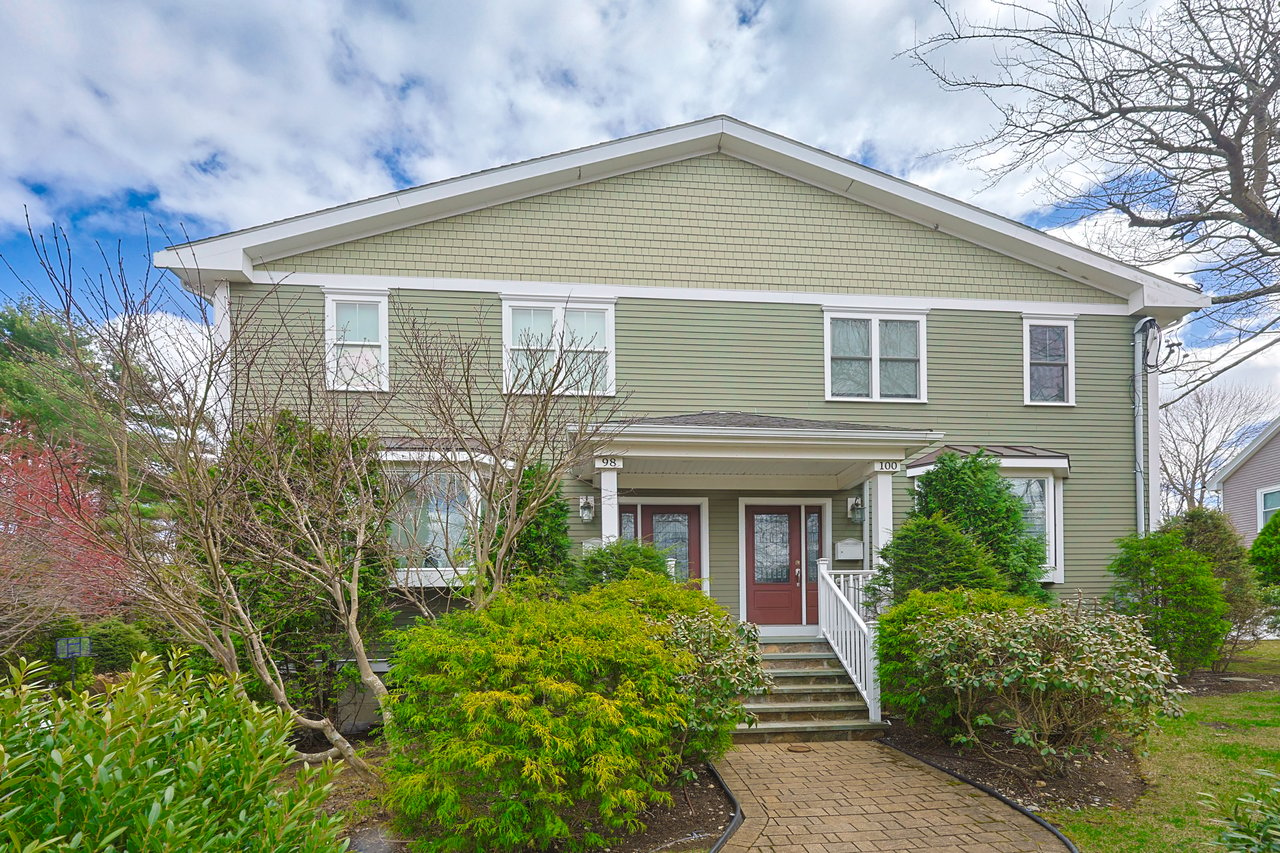
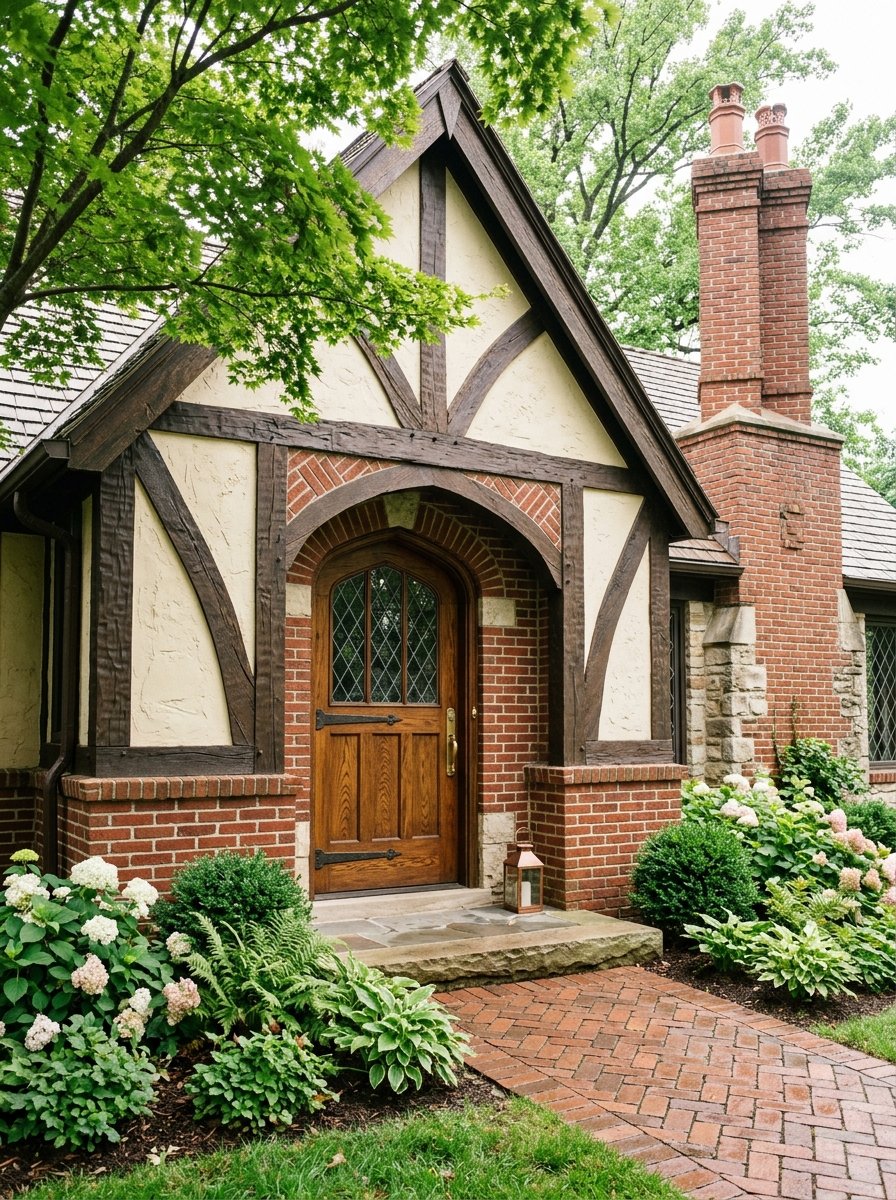
Brookline’s housing is older and varied rather than uniform or master planned. According to the town’s housing plan, you can see three-story row houses next to detached homes, with apartment buildings and commercial corridors nearby.
That variety is a big part of Brookline’s visual identity. The town also has nine local historic districts and a demolition-delay bylaw for historically significant buildings, which helps protect the character of many areas. If you like places with architectural variety and a sense of history, Brookline tends to deliver.
Brookline is unusually well served by transit for a suburb. The MBTA Green Line C branch runs along Beacon Street through places like Coolidge Corner, while the D branch connects the Longwood Medical Area, Brookline Village, and Reservoir.
The B branch also serves the northern edge of town, and bus routes including the 51, 60, 65, and 66 add more connectivity. Route 66 is especially useful because it runs through Brookline Village and Coolidge Corner between Nubian Station and Harvard Square.
For many buyers and renters, this is one of Brookline’s biggest selling points. If you want easier access to Boston, Longwood, or nearby hubs without depending on a car for every trip, Brookline stands out.
Brookline can feel very walkable, especially near its village centers. Town planning documents note that most of Coolidge Corner is within walking distance of some form of transit, and the town’s Green Routes planning emphasizes links to parks, business districts, schools, and other everyday destinations.
That said, the experience is not exactly the same on every block. If you live near a commercial corridor or transit stop, your day-to-day routine may feel much more car-light than it would in a more spread-out suburb. If you live farther from those centers, you may still enjoy access, but not always in the same effortless way.
This is one of the biggest practical realities of living in Brookline. The town says daytime parking is generally limited to two hours, and overnight parking is prohibited on most streets.
Residents can get parking stickers to park closer to home, but the overall system still requires attention. In some commercial districts, including Brookline Village, Coolidge Corner, JFK Crossing, and St. Mary’s, commercial permit parking is full and has waitlists.
If you are moving from a neighborhood with easy driveway parking or fewer restrictions, this can feel like an adjustment. Brookline often works best when you go in with realistic expectations about car ownership, guest parking, and winter parking rules.
Brookline’s park system is one of the town’s strongest everyday amenities. The Parks Department describes it as a substantial and diverse system that ranges from small neighborhood playgrounds to large historic landscapes and natural areas.
That matters because it adds breathing room to a fairly dense town. Parks and open space are described by the town as central to Brookline’s vitality and community recreation, which fits the lived experience many residents describe.
Brookline organizes public events in parks, especially during the summer, including outdoor movie screenings and community fairs. Those events help make the park system feel like part of daily life rather than just a backdrop.
The town also maintains a wide range of spaces and facilities, including Griggs Park, Larz Anderson Park, Brookline Reservoir Park, Amory Playground, Cypress Playground and Athletic Field, and Waldstein Playground. Whether you want a quick outdoor break, a larger green space, or a neighborhood playground, there are options across town.
For households thinking long term, Brookline’s day-to-day setup can be appealing. The Public Schools of Brookline serves more than 7,000 students in one high school, eight preK-8 schools, and early education classrooms across town.
The town booklet notes that most elementary students live within walking distance of their assigned school, with transportation provided only for those who live more than 1.5 miles away. That reinforces Brookline’s broader pattern of neighborhood-based daily life.
The district also includes inclusive preschool and pre-kindergarten programs and participates in METCO, serving about 300 Boston students. For many families, this can support a routine that feels connected to the town rather than heavily car-dependent.
Brookline offers a mix of condos, apartments, multifamily buildings, and single-family homes, but it is an expensive market by regional standards. Census estimates show a median gross rent of $2,835 and a median owner-occupied home value of $1,246,800.
The ownership pattern is mixed as well. The Census reports an owner-occupied rate of 46.9%, and the town’s housing plan says just over half of Brookline’s housing stock is renter occupied.
Brookline’s housing plan says single-family districts make up 72% of the town’s land, while apartment-house districts account for 12% and two-family districts for 10%. Multifamily housing is concentrated around commercial areas in North Brookline and near transit-serving corridors like Coolidge Corner, Brookline Village, and Washington Square.
That helps explain why Brookline can feel different from one area to the next. Near village centers, the condo and multifamily lifestyle is more visible. Farther from the core, you are more likely to find quieter single-family pockets.
The town also notes that many multifamily buildings were converted to condominiums over time, and it estimates that 41% of Brookline condos are currently rented. So if you are shopping here, it is helpful to look beyond labels and understand the specific block, building type, and surrounding uses.
Brookline offers strong transit access, neighborhood character, parks, and close proximity to Boston. For many people, that combination is exactly the point.
But Brookline is not the best fit for everyone. If you want abundant parking, a large supply of detached homes, or a lower-maintenance suburban setup, you may find the tradeoffs more noticeable here.
The town booklet notes a few practical responsibilities that come with living in a dense New England community. Residents must shovel sidewalks after storms, parking rules can tighten in winter, and utilities and parking logistics often matter more than they do in less dense towns.
In everyday life, Brookline feels established, connected, and highly local. It gives you compact village centers, a broad park system, strong transit access, and a residential setting that still keeps Boston close.
For buyers and renters who value walkability, neighborhood character, and city-adjacent convenience, Brookline can be a compelling choice. The key is making sure your block, housing type, and parking setup match the way you actually want to live.
If you are thinking about moving to Brookline or comparing it with nearby inner-ring suburbs, Valerie Wastcoat can help you understand the tradeoffs, the housing options, and the neighborhood feel so you can make a confident move.
If you’re looking for a dynamic approach to real estate from a top-performing, knowledgeable agent who truly goes above and beyond for clients, look no further. I will work side by side with you, navigating current market conditions and guiding you every step of the way.